
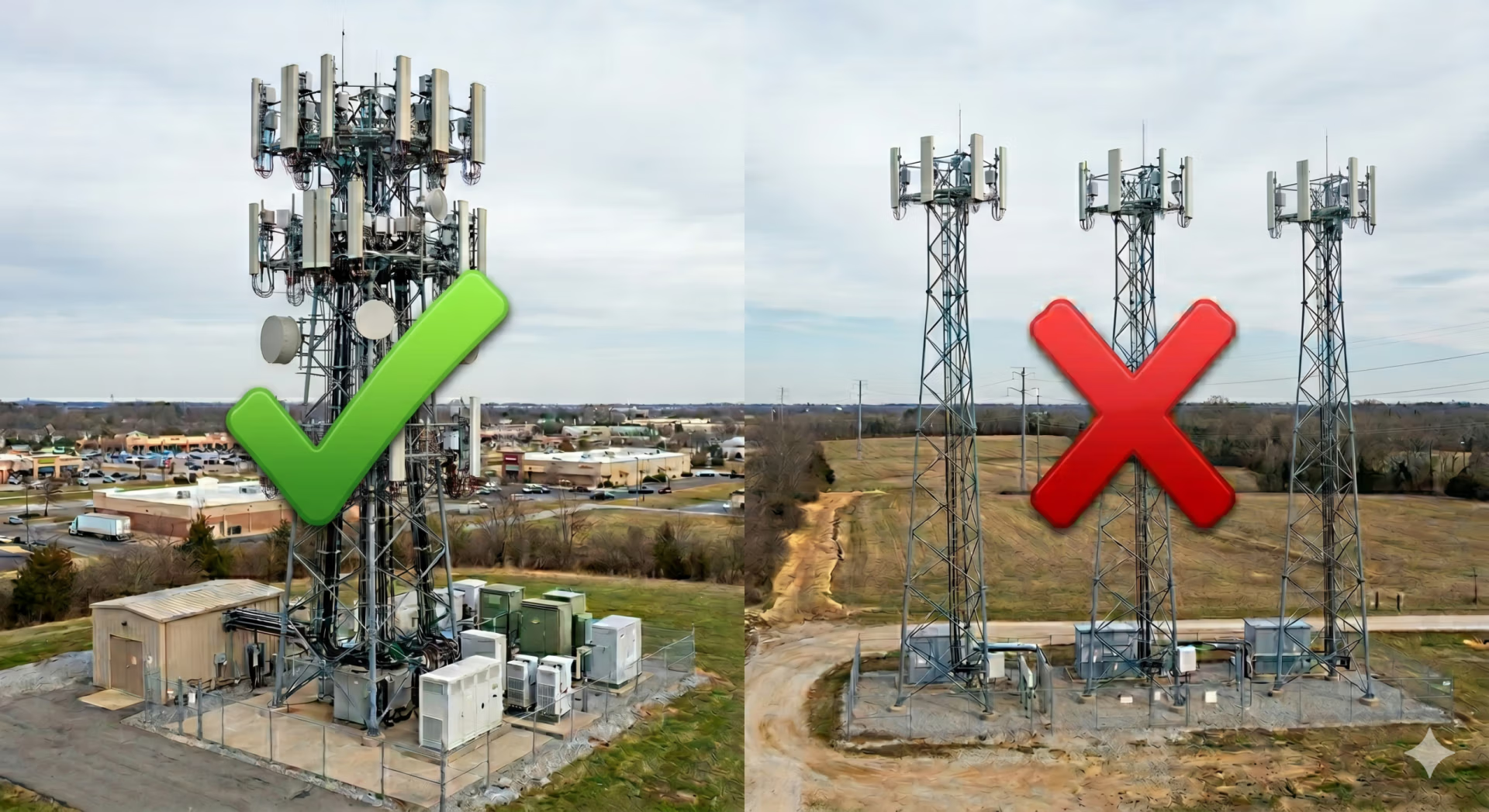
Are Investors Getting Spooked by Build-to-Relocate Tower Strategies?
Last month, two major private cell tower companies went to Wall Street to raise capital. According to data in the Houlihan Lokey Digital Infrastructure Update (Q1 2026), both companies received a BBB− credit rating. On paper, rating agencies viewed them as having the exact same level of risk.
But when it came time for the market to actually price the deals, investors treated them entirely differently.
- Vertical Bridge: Borrowed $1.6B at an interest rate of around 5.5%.
- Tillman Infrastructure: Borrowed $850M but was charged a steep 6.77%.
Same exact risk rating, but Tillman was forced to pay 1.35% more in interest. On an $850M deal, that amounts to an extra $11.5 million in interest expense every year.
Why did Wall Street penalize Tillman so heavily?
It comes down to a debate playing out in the industry right now — and to understand it, you need to know what build-to-relocate actually means.
When carriers like AT&T and Verizon lease space on a tower, those leases escalate every year. A tower lease that started at $1,600/month in 2000 — with a standard 3% annual escalator plus additional bumps each time a carrier upgraded equipment — can easily run $3,500 to $5,000/month today, and we regularly see leases exceeding $7,000/month. Over tens of thousands of sites, that adds up fast. Build-to-relocate developers like Tillman offer carriers an exit: build a new tower right next to the expensive one, charge the carrier significantly less rent, and let them move their equipment over. The old tower loses its tenant. The carrier saves money. The developer gets a new anchor lease.
It works best — and happens most often — in rural areas and places without formal zoning requirements, where building a competing tower doesn’t require fighting through a local approval process.
Vertical Bridge does some build-to-relocate work too, but it’s one small piece of a diversified portfolio of 18,000+ towers. For Tillman, relocation has been the primary strategy.
By demanding a higher interest rate from Tillman, Wall Street sent a clear message: investors are getting spooked by relocation-heavy portfolios. They’re asking hard questions — will carriers actually stay on these towers long-term? What happens if carriers tighten capital budgets and slow down their appetite for moving? Those aren’t hypothetical risks. They’re the kind of questions that matter when $850 million is on the line.
The takeaway: Not all steel in the ground is valued equally. Build-to-relocate has driven real growth for private developers, but Wall Street is now charging a heavy premium for it. Investors are looking past the official rating label and staring hard at how these towers actually make their money.
If you own land near an existing tower — especially in a rural area — you may already know that build-to-relocate developers have been active in your market. Have you been approached? And if so, did you know that the long-term stability of that lease may look very different from a traditional tower deal?
Steel in the Air has advised landowners on cell tower leases since 2004. If a developer has approached you about a new tower on your property, we’re happy to help you understand what you’re actually being offered.