
Cell Towers
Cell Tower Companies in 2026
Cell tower companies, also known as cell tower leasing companies or cell phone tower companies, are entities that own and operate cell towers. Tower companies either build or acquire towers from other tower companies or wireless providers. These companies develop and operate towers to lease space on the towers to wireless providers. Leases between a tower company and a wireless provider are known as collocation or tenant leases. The tower company pays for expenses to construct and operate the tower and, in return, collects rent of $1,000/mo. to $5,000/mo. for each collocation. The average cell tower owned by the three largest tower companies in the United States has approximately 2.1 to 2.2 wireless collocations on it.
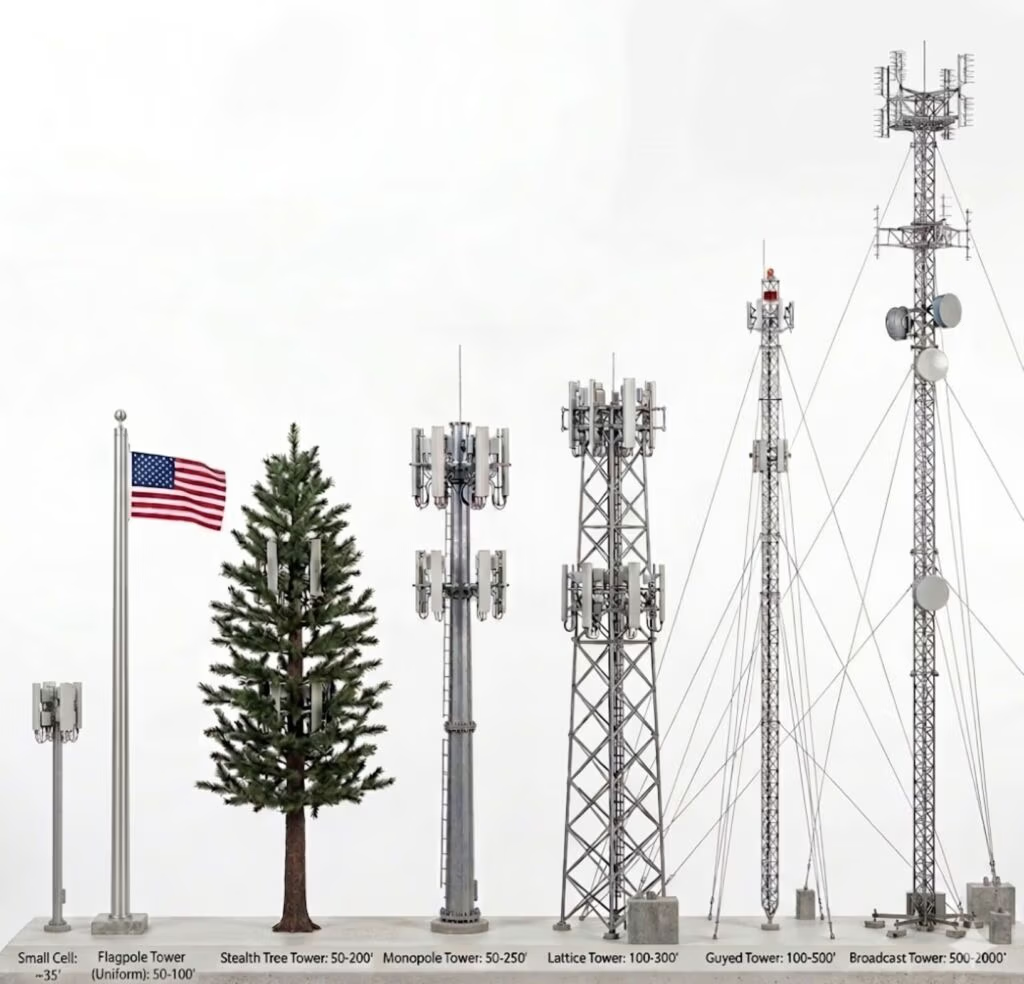
How Many Cell Towers Are There In The Us?
In 2026, the U.S. cell tower industry is highly concentrated at the top, with the top three tower companies owning 100,000 of the estimated 185,000 cell towers in the country. From there, it becomes highly fragmented, with 58% of cell tower companies owning between 1 and 10 towers, and another 25% owning between 11 and 100 towers. Below is a chart with our estimates on the number of assets owned by each of the three largest public tower companies. We also show approximate counts of non-cell-tower assets each company owns or controls.
Contact Us
What Other Assets Do Tower Companies Own?
Besides owning towers, cell tower companies also manage rooftops on buildings owned by others. Some of the top cell tower companies have also purchased portfolios of leases from lease buyout companies. Lease buyout companies like Unison Site Management, Communications Capital Group, and Wireless Capital Partners no longer exist after selling their portfolio of leases that they bought from landowners and building owners. Some tower companies (notably Crown Castle) have aggressively pursued ownership of small cells and fiber optic networks.
| US Towers | Rooftops under Management | Active Rooftops (ones with wireless tenants) | Small Cells/DAS Nodes | Wireless Leases (no structure included) | |
|---|---|---|---|---|---|
|
42,000 |
19,000 |
2,000 |
800 |
2,600 |
|
|
40,000 |
|
|
|
2,300 |
|
|
17,464 |
4,800 |
500 |
|
|
Do Wireless Carriers Own Many Towers?
Not anymore. Historically, wireless carriers once owned towers, with some carriers even operating their own tower companies (T-Mobile Towers, AT&T Towers, and US Cellular Towers). However, over the last 15 years, tower companies have bought towers from wireless carriers. The carriers saw the towers as extra non-critical assets that could be exchanged for capital. Some of the largest tower acquisitions include:
- Verizon sold 6,339 towers to Vertical Bridge in 2024
- Verizon sold 11,448 towers to American Tower in 2015
- AT&T sold 9,700 towers to Crown Castle in 2013
- T-Mobile sold 7,200 towers to Crown Castle in 2012
- in 2005, Sprint sold 6,600 towers to Global Signal, which was later acquired by Crown Castle.
We estimate that there are approximately 10,000 towers in the US in 2026 still owned by wireless carriers.
What Tower Companies are Building the Most Towers?
Curious as to which tower companies are building the most towers in the United States? We were, so we built this interactive map which shows the private and public tower companies who are the most active over the last two years.
📡 How to Use This Map
This map shows cell towers registered with the FCC and constructed between January 2024 and March 2026, color-coded by tower owner. Data source: FCC Antenna Structure Registration (ASR) database.
⏱
Timeline slider
Drag left or right to move through months, or press Play to animate.
Drag left or right to move through months, or press Play to animate.
📍
Click any dot
See the tower owner, FCC registration number, and construction date.
See the tower owner, FCC registration number, and construction date.
🔲
Legend
Click any company name to show or hide that owner's towers.
Click any company name to show or hide that owner's towers.
🔀
Cumulative / Monthly
Toggle between all towers built to date vs. just that month's new builds.
Toggle between all towers built to date vs. just that month's new builds.
Top 25 Cell Tower Companies In the US
Below is a list of tower companies listed by the number of towers owned as estimated by Steel in the Air. Some of these tower companies have more “sites” in their inventory which include properties or structures (like billboards or signs) that they manage for the entity that owns the structures. The list below only includes owned towers, not managed sites. If you believe the list is incorrect, please contact us with the number of owned towers in your portfolio.
| Tower Developer | Number of Towers |
|---|---|
| American Tower | 42,000 |
| Crown Castle | 40,000 |
| SBA Communications | 17,464 |
| Vertical Bridge | 17,000 |
| Array Digital Infrastructure | 4,449 |
| Tillman Infrastructure | 2,000 |
| Harmoni Towers | 1,700 |
| Diamond Towers | 1,100 |
| TowerCo | 850 |
| Phoenix Tower International | 950 |
| Octagon Towers | 525 |
| Tarpon Towers | 500 |
| K2 Towers | 409 |
| Horvath Towers | 400 |
| Subcarrier | 300 |
| Skyway Towers | 480 |
| TowerCom | 370 |
| APC Towers | 250 |
| Milestone Towers | 155 |
| Branch Towers | 150 |
| Cityswitch | 150 |
| Industrial Tower West | 125 |
| Sun State Towers | 120 |
| Peppertree purchased 1,023 towers from AT&T under the name Octagon Towers, but they also have investments in other tower companies including TowerCo, Blue Sky Towers, Branch Towers, Horvath Towers, Clearview Tower Company, AW Towers, K2 Towers, and Pegasus Tower Development. | |
How Does Steel In The Air Help Regarding Cell Phone Tower Companies?
Steel in the Air assists landowners who have ground leases under the towers or rooftop leases on sites managed by the cell tower companies. We also assist governments, appraisers, investors, and “mom and pop” cell tower owners with valuation services.

Insider tips
- Cell towers were originally built with a certain capacity in mind. Some are designed to house a single carrier, while others are designed to support multiple carriers. As such, their value varies widely.
- Cell tower leasing companies hire 3rd party “lease optimizers” like Black Dot and Md7 to help them renegotiate their land leases with landowners. These companies try to disguise their identity so that the request appears to come directly from the tower company. Most of these renegotiation requests are not worth considering.
- Wireless carriers and tower companies often send notices to their lessors (e.g., landowners, building owners, and structure owners) stating that the lessor must consent to certain equipment modifications. This is not necessarily true. In many cases, you can negotiate better terms or receive some form of compensation in exchange for your “consent.”
- Finding the sweet spot in lease negotiations requires knowledge of industry dynamics and company-specific deployment plans. Relocating cell sites is expensive; however, if their gears are already moving, companies might eat the costs, especially when they’re dealing with property owners who are difficult or too demanding.