
Landmark Dividend Lease Buyouts
Contact Us
Who Is Landmark Dividend?
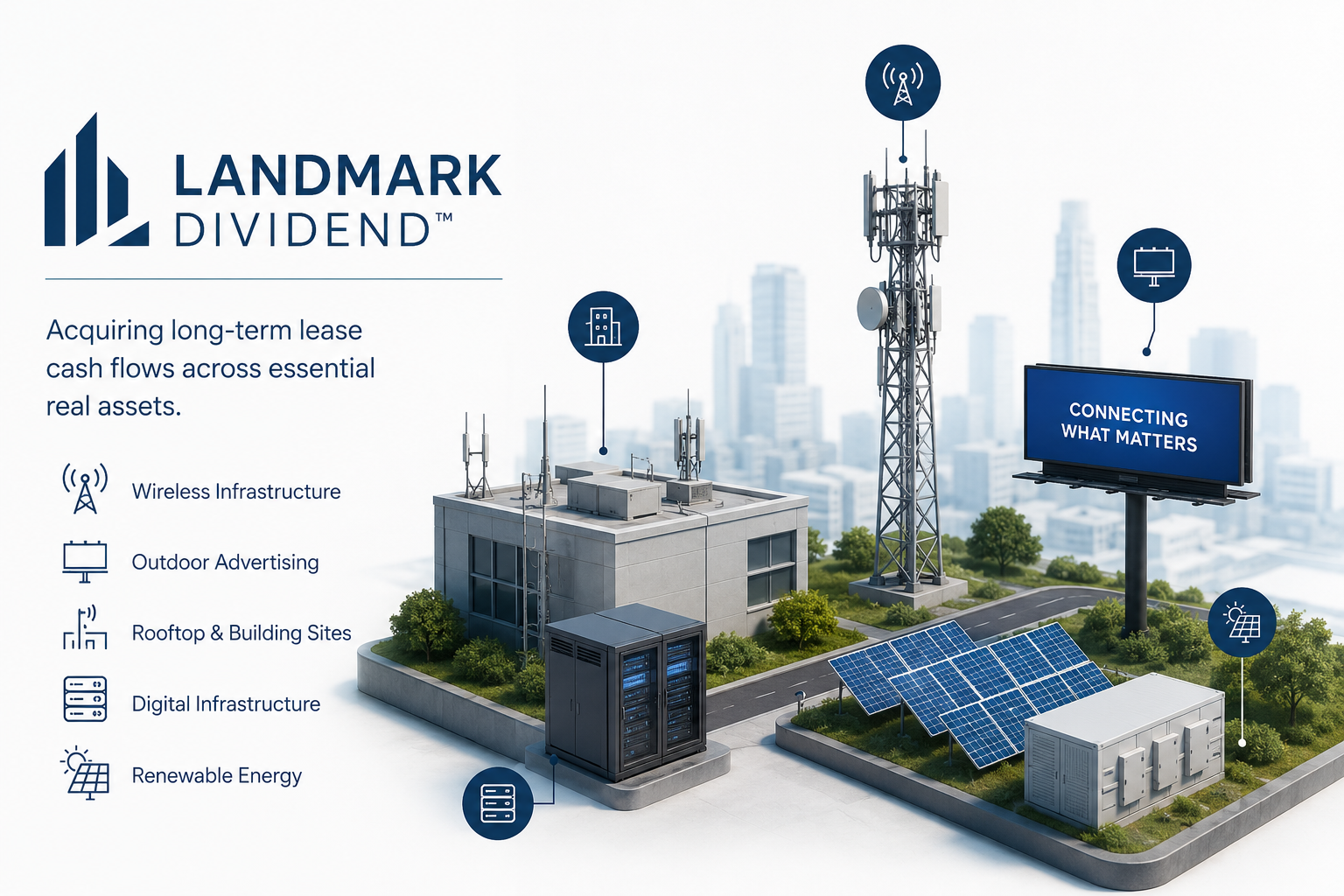
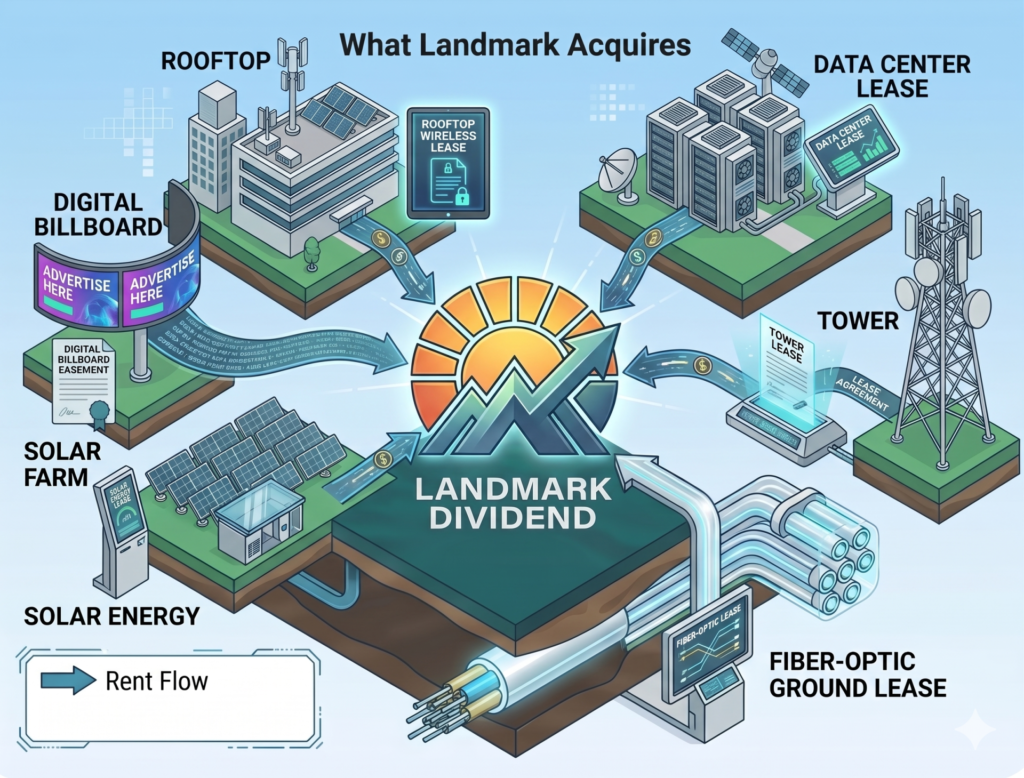
Landmark Dividend is a lease aggregator and real estate investment platform founded in 2010 and headquartered in El Segundo, California. The company acquires ground leases and easements tied to wireless towers, rooftop cell sites, outdoor advertising structures, digital infrastructure, and renewable energy assets. Within the wireless industry, they are what is known as a lease buyout company — a firm that purchases the future rental income stream from landowners and building owners in exchange for a lump-sum payment.
Landmark is not a tower company. They do not build or manage towers. Their business model is financial: acquire streams of contractual cash flows at a discount to their long-term value, aggregate them into a portfolio, and generate returns for investors.
In May 2021, Landmark was acquired by DigitalBridge (NYSE: DBRG), a global alternative asset manager focused on digital infrastructure. Landmark’s publicly traded limited partnership, Landmark Infrastructure Partners (ticker: MLRK), was subsequently taken private as part of that ownership transition. In late 2023, the Abu Dhabi Investment Authority (ADIA) acquired a 40% stake in Landmark alongside DigitalBridge, with the transaction closing in April 2024.
The result is a company with deep institutional backing and a broad, diversified acquisition mandate. Wireless is one of several asset classes Landmark pursues — not their only focus.
What Does Landmark Dividend Do With Your Lease?
When Landmark acquires your cell tower or rooftop lease, they record a perpetual easement on your property. That easement transfers the right to collect rent from your wireless tenant — whether that’s a tower company like American Tower or Crown Castle, or a carrier directly — to Landmark for the remaining term of the lease, including all renewal options.
Your ownership of the underlying property does not change. But the lease rights, the rent, and control over certain lease decisions transfer to Landmark. Depending on the terms of the purchase agreement, Landmark may also have the right to consent to — or block — future modifications to the lease or the property that could affect the site.
In practice, most landowners have little day-to-day contact with Landmark after closing. The wireless tenant continues to operate the site, and Landmark collects the rent in the background.
Landmark’s Role in the Cell Tower and Rooftop Lease Market
For most of the 2010s, Landmark was one of the more active and recognizable names in the cell tower lease buyout space. They had one of the larger sales teams (originators) out there- proactively contacting landowners with leases to pitch them on selling their lease assets. They were professional to work with, organized in their approach, and willing to compete for leases on price. Landowners who engaged them generally found the process straightforward.
That activity level has diminished. We do not see Landmark making nearly as many offers on cell tower leases as we did five or six years ago. When offers do come in, they tend to be priced below what other active buyers in the market are willing to pay for the same asset.
Our read on this is straightforward: Landmark under DigitalBridge ownership has a broader mandate and more investment alternatives competing for the same capital. Wireless tower leases are still part of their portfolio, but they no longer appear to be pursuing market share aggressively the way some of their competitors are. Whether that reflects return thresholds set at the fund level, a strategic shift toward other asset classes, or simply a more selective acquisition approach, the practical effect for landowners is the same: Landmark is not typically the highest bidder in a competitive process.
None of this reflects on their integrity or professionalism as a counterparty. If you have received an offer from Landmark, it is a legitimate offer from a well-capitalized company that will honor its commitments. The question is whether it is the best offer you could receive.
1031 Exchange Considerations
Like most lease buyout companies, Landmark may note that the sale of a cell tower lease easement can potentially qualify for a 1031 tax-deferred exchange, allowing you to reinvest the proceeds into another qualifying property without immediately triggering capital gains tax.
This is not unique to Landmark — it is a general provision of the tax code that applies to easement transactions. Whether a 1031 exchange makes sense in your situation depends on your tax basis, your other investment holdings, and whether you have a suitable replacement property to identify. This is a conversation for your CPA, not your lease buyer.
Questions to Ask Before Accepting Any Offer
Whether the offer in front of you is from Landmark Dividend or anyone else, the evaluation process should be the same:
1
What is the fair market value of this lease?
Not Landmark’s number — the actual market value, based on what multiple buyers would pay in a competitive process.
2
Is this lease likely to generate additional income in the future?
Sites with room for additional tenants, upcoming renewal negotiations, or strong carrier demand may be worth more than a buyout offer reflects.
3
Are there restrictions in the purchase agreement that would constrain my use of the property going forward?
Perpetual easements can run with the land and affect future sales, financing, or development.
4
What would other companies offer for the same lease?
There are multiple active buyers in this market. One offer tells you what one buyer thinks. Competing offers tell you what the market thinks.
5
What are the tax consequences, and have I discussed them with a CPA?
6
Am I better off keeping this lease?
In some cases — particularly where the lease has a long remaining term, strong escalators, and a creditworthy tenant — the present value of the future income stream exceeds what any buyer will offer.
How Steel in the Air Can Help
Steel in the Air works exclusively on behalf of landowners and building owners. We do not represent Landmark Dividend or any other buyout company, and we do not purchase leases ourselves.
If you have received an offer from Landmark, here is what we can do:

Evaluate the offer. We will review Landmark’s proposal and give you an independent read on whether it reflects fair market value for your specific lease. If it does, we will tell you that. If it doesn’t, we will tell you that too. We have tracked thousands of lease buyout offers in our proprietary database.
Determine whether selling makes sense. Not every landowner should sell. We will assess the long-term value of your lease — including future renewal potential and escalation — and give you an honest comparison against what a sale would net you after tax.
Run a competitive process. If you decide to sell, we can approach multiple buyers on your behalf, including companies that are currently more aggressive in the market than Landmark. We have brokered over $100 million in lease buyout transactions and maintain relationships with the active buyers.
Review the purchase agreement. The terms of the easement matter as much as the price. We can help you identify provisions that may be problematic before you sign.
Our consulting fees are flat and disclosed upfront. For brokerage services, we are compensated by the buyer — at no cost to you — and we do not take compensation from both sides of a transaction.
Contact us for a free initial discussion. We will tell you upfront whether we think we can add value to your situation.
Get a Free Evaluation →Frequently Asked Questions
Is Landmark Dividend a legitimate company?
Yes. Landmark Dividend is a well-established company with institutional ownership (DigitalBridge and ADIA) and a track record dating to 2010. Receiving an offer from them is not a scam. That said, legitimate and best offer are not the same thing.
Why is Landmark reaching out to me?
Landmark and other buyout companies use public records, FCC databases, and county assessor data to identify properties with cell tower leases. If you have a tower or rooftop cell site, your lease is probably in their database. The outreach is systematic, not personal.
Should I sell my cell tower lease to Landmark Dividend?
That depends on the value of your lease, your financial situation, and whether Landmark’s offer reflects what the market would actually pay. Many landowners are better served by either keeping their lease or running a competitive sale process. Contact us before you decide.
How much does Landmark pay for cell tower leases?
Offer amounts vary significantly based on rent level, escalation rate, tenant, remaining term, and site-specific factors. As a general benchmark, cell tower leases commonly sell at multiples of annual rent — but the range is wide, and Landmark’s offers have tended to come in below competing bids in recent years. We track buyout transaction data and can provide context specific to your lease.
What happens to my property after I sell to Landmark?
Landmark records a perpetual or long term easement on your property. You retain ownership of the land, but Landmark holds the lease rights for the remaining term plus all renewal options. Your wireless tenant continues to operate the site unchanged — but Landmark, not you, collects the rent and manages the lease relationship.
Can I negotiate Landmark’s offer?
You can try, but negotiating directly with a single buyer rarely produces the same result as having multiple buyers compete for your lease. We recommend getting competing offers before negotiating with anyone.