
How to Evaluate Cell Tower Lease Buyout Offers from Symphony Towers Infrastructure
Contact Us
You Got an Offer from Symphony Towers — Now What?
If someone from Symphony Towers Infrastructure has contacted you about buying your cell tower lease — or your tower — you’re probably trying to figure out who they are and whether their offer is worth considering. Chances are – they are not the only company that has contacted you multiple times trying to get you to sell your lease or tower to them.
Symphony Towers is a real company, and they’re active in the market. But an offer on the table doesn’t mean it’s the right offer, and it certainly doesn’t mean you have to respond on their timeline. Before you do anything, it’s worth understanding who you’re dealing with and what the offer actually means.
We help landowners evaluate offers like this every day. We’ll review yours for free and help you figure out what makes sense — whether that’s selling, negotiating, or simply holding onto your lease.
Who Is Symphony Towers Infrastructure?
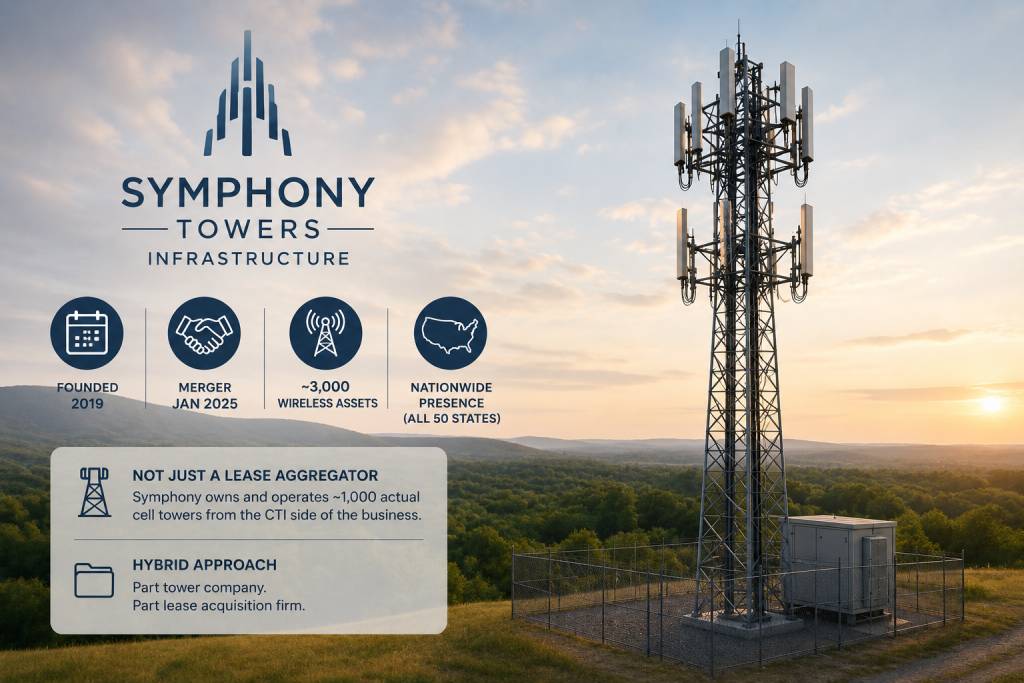
Symphony Towers Infrastructure is one of the newer but faster-growing players in the cell tower lease buyout market. The company was originally founded in 2019 as Symphony Wireless, an affiliate of Palistar Capital, a New York-based alternative asset manager focused on digital infrastructure. In January 2025, Palistar merged Symphony Wireless with another portfolio company, CTI Towers — a tower company founded in 2011 with an original investment from Comcast Ventures — creating the combined entity now known as Symphony Towers Infrastructure.
That merger is important to understand. Symphony isn’t just a lease aggregator — they also own and operate approximately 1,000 actual cell towers that came from the CTI side of the business. Combined with their easement portfolio, Symphony manages roughly 3,000 wireless assets across all 50 states. This makes them a hybrid: part tower company, part lease acquisition firm.
The company is headquartered in White Plains, New York and is currently led by Jason Hirsch, who was appointed President and COO in February 2026. Hirsch spent 25 years at American Tower Corporation, where he held senior roles in real estate, land management, and M&A — including leading American Tower’s ground lease acquisition efforts. Before Hirsch, Symphony went through two other leaders in quick succession: Bernard Borghei (co-founder of Vertical Bridge) served as CEO from mid-2024 until his departure in July 2025, and David Bacino (formerly CEO of CTI Towers) stepped in as CEO before transitioning to Vice Chairman. That level of leadership turnover in a short period is worth noting — not as a red flag, but as context for a company that is still evolving its identity and strategy.
Behind all of it sits Palistar Capital, which also operates Harmoni Towers and Galaxi Towers (a new-build tower development company) and has described itself as having access to “billions in capital” for wireless infrastructure investment. Symphony is well-funded and can close transactions.
What to Know Before You Sign Anything
Symphony’s outreach will typically lead to a Letter of Intent (LOI) that lays out the deal terms. Before you sign it, here’s what you should understand.
Symphony is contacting you because you have a lease. They have a team of data analyst searching through tower data, permit records, deed records, and other sources for information on who has cell tower leases. Its as simple as that.
The LOI locks you in. Like most lease buyout companies, Symphony’s LOI will include an exclusivity provision. Once you sign, you agree not to talk to other buyers or entertain competing offers for a set period. If you later discover the price is below market, you’re stuck until that window closes. If another company independently makes a better offer – your out of luck. Get an independent evaluation before you sign, not after.
Watch for revenue share language. Symphony actively markets revenue share as a feature of their offers — the idea that you’ll continue to participate in upside if they add tenants to the site after closing. This sounds attractive, but in practice, revenue share payments rarely materialize in meaningful amounts for most landowners especially on towers owned by others. The conditions that trigger revenue share payments are often narrow, and the buyer controls the decisions about adding tenants. We’ve analyzed hundreds of revenue share arrangements and the data is clear: for most sellers, a higher upfront price is worth more than a revenue share promise. In most cases, any new tenant that comes to your property will come because they want your rooftop or tower, not because a third party has a revenue share in their LOI or easement agreement.
Be skeptical of fear-based urgency. Symphony’s marketing materials reference carrier decommissioning (particularly the T-Mobile/Sprint tower consolidation), technology changes, and lease termination risk as reasons to sell now. While these are real industry dynamics, they are often overstated in the context of individual lease decisions. Most leases are not at imminent risk of termination. If your site has an active tenant paying rent, the risk of sudden decommissioning is generally low — and it’s a risk you can evaluate with data rather than accept on the basis of a marketing pitch. Think of it this way- they wouldn’t be buying if they thought your lease was likely to go away.
Understand the easement structure. Symphony’s standard transaction involves purchasing an easement on your property. The term can vary. You’ll retain ownership of the property, but Symphony will control the lease rights, collect the rent, and manage the tenant relationship for the duration of the easement. Make sure you understand the length of the easement and what rights you’re conveying.
Their origination team works for them, not for you. The person who called or wrote to you is professional and may be genuinely helpful — but they are employed by Symphony and compensated based on deal activity. They will not tell you if the offer is below market, and they will not suggest you shop it. That’s not a criticism; it’s just the nature of the relationship.
Not sure what your offer means? We’ll walk you through it — free, 15 minutes
Get a Free Evaluation →Is the Price Fair?
It might be. But you can’t know from a single offer.
The value of your lease depends on your specific tenant, current rent, escalation schedule, remaining term, whether there’s a right of first refusal, the number of tenants on the structure, and broader market conditions. As a rough benchmark, most cell tower leases and rooftop leases trade at approximately 18 times the annual rent — but individual leases can be worth significantly more or less depending on these factors.
Because Symphony is a hybrid company that both owns towers and buys leases, they may approach your asset differently depending on what it is. If you own a tower they want to acquire, the valuation considerations are different than if they’re just buying a ground lease easement. Either way, a direct offer from any single buyer is a starting point for evaluation, not a market price.
In our experience brokering cell tower lease sales, a competitive process with multiple qualified buyers almost always yields better results than a bilateral negotiation with a single company. We guarantee it: if we can’t beat an existing offer by at least our fee, you don’t owe us anything.
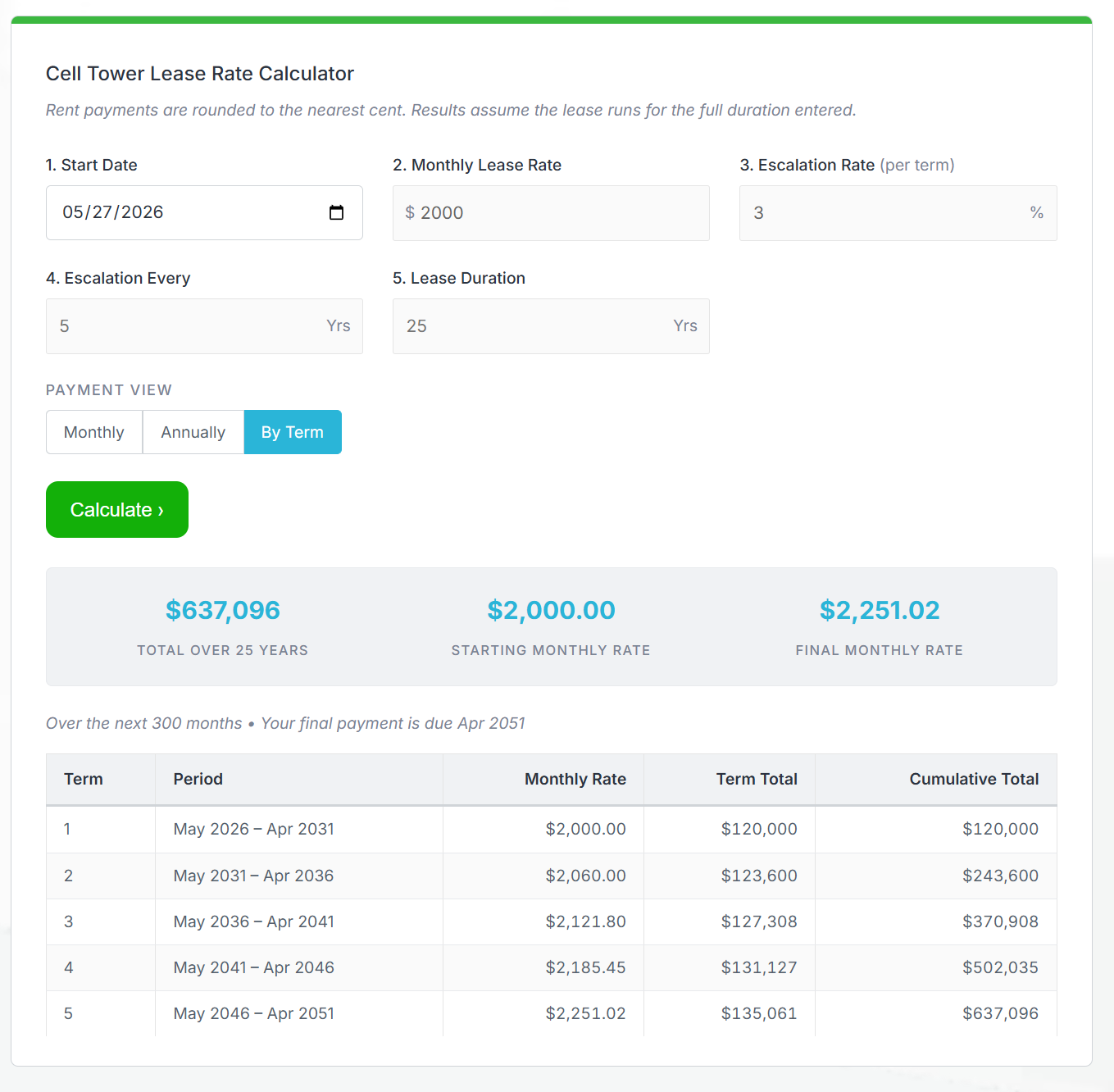
If you want to compare the future rent stream from your lease and the lease buyout offer, please see our lease buyout calculator.
What If You Don’t Want to Sell?
That’s perfectly fine — and more common than you’d think.
Many landowners who contact us after receiving a buyout offer decide they’d rather keep their lease. Sometimes the math doesn’t work. Sometimes the timing isn’t right. Sometimes they just want to understand their options and come back to it later. Or they determine that the long term impact of the easement on their property outweighs the present benefit of the lump sum.
We can help with all of that. If you don’t want to sell, we can review your lease terms, help you understand your renewal rights, and make sure you’re well-positioned for the next time your tenant comes to the table. If you do want to sell — now or in the future — we’ll make sure you get the best possible outcome. Unlike other consultants, we won’t press you to sell because it would generate a higher payday for us.
The initial conversation is free, takes about 15 minutes, and there’s no obligation. We’ve been doing this for over 20 years, and we’re happy to help even if it doesn’t result in a fee. We’d rather build a relationship and have you call us when the time is right.
Talk to Us — It’s Free
Here’s what we can do for you in a single phone call:
Tell you whether Symphony’s offer is in the right range for your lease
Explain the parts of the offer — including revenue share provisions — that you might not fully understand
Help you decide whether selling makes sense or whether keeping your lease is the better move
If you want to sell, explain how a competitive process works and what you can expect
What to have ready when you call: A copy of your lease (if you have it) and the offer letter or LOI from Symphony. If you don’t have these handy, that’s fine — we can still talk through your situation.
We work only for landowners. We don’t buy leases ourselves, we don’t work for tower companies or aggregators, and we have no financial relationship with Symphony Towers or any other buyer. Our only interest is making sure you make an informed decision.
Frequently Asked Questions
How much do your services cost?
Our fees vary depending upon the complexity of the situation and what we are being asked to do. If you want an independent assessment of whether you should sell or not and how much your lease(s) are worth, we can be retained on a consulting basis. Our review fee starts at $4,000 per lease with discounts for multiple leases at the same site and time.
If you are looking for someone to broker your cell site or tower lease(s) for you, we can be retained on a contingency basis, where we are paid a commission of 6% or less of the total sale price. There is no obligation to sell and if you have an offer, we will evaluate it before you engage us to make sure we can get you a better offer that justifies our fee.
Who is Symphony Towers Infrastructure?
Symphony Towers Infrastructure is a wireless infrastructure company headquartered in White Plains, New York. It was formed in January 2025 through the merger of Symphony Wireless (a lease acquisition affiliate of Palistar Capital) and CTI Towers (a tower company originally backed by Comcast Ventures). The company manages approximately 3,000 wireless assets across all 50 states, including both owned towers and lease easements.
Is Symphony Towers Infrastructure legitimate?
Yes. Symphony is backed by Palistar Capital, a well-capitalized alternative asset manager, and is led by experienced industry executives. They are an active acquirer with a substantial portfolio. Receiving an offer from them is not a scam. However, legitimate and best available price are two different things.
Should I sell my cell tower lease to Symphony Towers?
That depends on your financial situation, your plans for the property, and whether the offer reflects fair market value. Many landowners are better off keeping their leases. If you’re unsure, contact us for a free evaluation before signing anything.
How much does Symphony Towers pay for cell tower leases?
It varies widely depending on rent, escalation, tenant, remaining term, and other factors. Most cell tower leases trade at approximately 18 times the annual rent, but some are worth significantly more. Symphony often includes a revenue share component in their offers, which can make the headline terms appear more attractive — but the actual value of revenue share payments is usually modest.
How much does Sympony Towers offer when buying cell towers?
When they buy cell towers, the offers generally start at 20 times tower cash flow (Annual rent minus annual expenses) and go up from there, sometimes as high as 40 times the annual tower cash flow. If you have received an offer to buy your tower(s) and want to know how to value the tower or get other offers, contact the best cell tower broker in the business.
What factors contribute to higher or lower offers?
The main factor is whether your lease is currently at market rate or not. If your lease is undervalued and it is set to expire in the next 5-10 years, a buyer may make a better offer anticipating that they will receive additional rent in the future. Another factor that weighs heavily on the multiple of rent is the escalation. 3% or more? Great. 2% or less annually? Bad. Lastly, Symphony like other buyers looks for opportunities where other wireless carriers will need the site.
What is revenue share and should I care about it?
Revenue share is a provision where the buyer agrees to pay you a percentage of any additional revenue they generate from the site — for example, from adding new tenants. While it sounds appealing, most revenue share arrangements produce little or no additional income for the seller. We generally recommend prioritizing a higher upfront purchase price over revenue share promises. Learn more about revenue share.
What happens to my lease after I sell to Symphony Towers?
Symphony acquires an easement on your property and takes over the lease relationship with your wireless tenant. You retain ownership of the property, but Symphony controls the lease rights, collects the rent, and manages tenant relationships for the duration of the easement. If Symphony also owns the tower on your property, they will manage it as part of their tower portfolio.