
Our Advisory Team
How AT&T’s Acquisition of DISH Spectrum Impacts Cell Tower Owners and Lessors
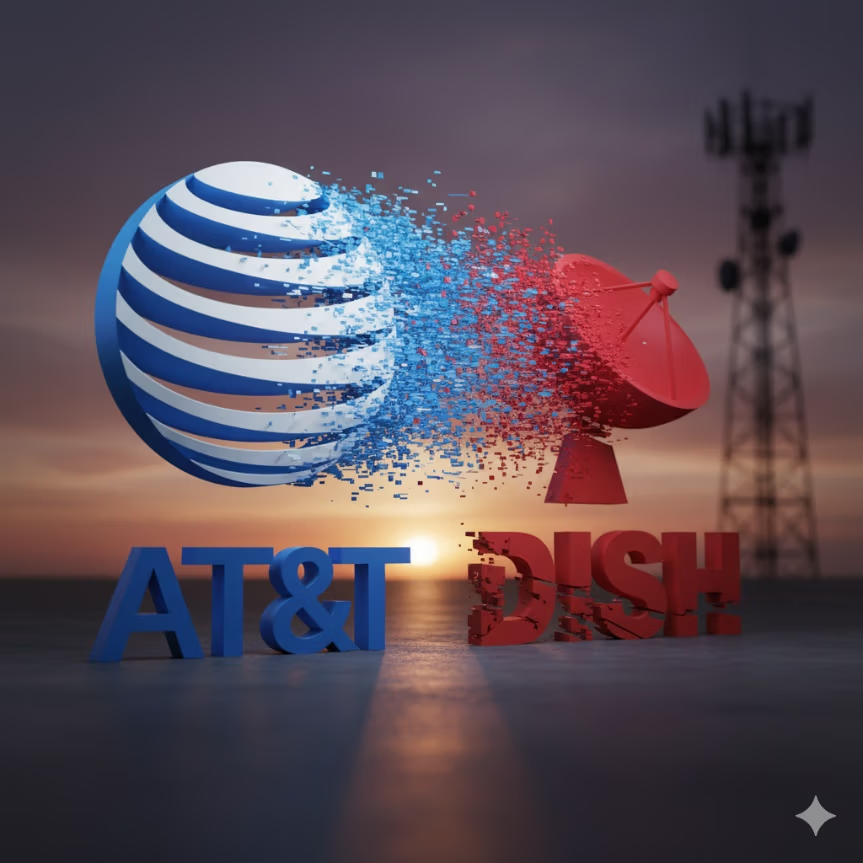
In one of the most significant wireless industry moves in recent years, AT&T has agreed to acquire DISH’s (EchoStar’s) 600 MHz and 3.45 GHz spectrum holdings for $22.7 billion. For cell tower landowners and private tower owners, this signals more than just a reshuffling of airwaves—it’s a market shift that directly impacts cell tower lease valuations, negotiations, and tower buyout offers.
For years, DISH was regarded as the fourth carrier expected to introduce competition to the U.S. wireless market. Its spectrum assets—especially the low-band 600 MHz licenses—were valuable enough to generate hope. However, DISH never fully deployed them, leaving billions of dollars’ worth of frequencies unused. Now, AT&T has stepped in, consolidating this spectrum for its own growth while DISH shifts to operating as an MVNO under AT&T’s umbrella.
This merger reshapes network strategies, shifts tower company valuations, and changes the future revenue outlook for tower assets across the U.S. (Note- the merger still needs to be approved by the FCC and the Department of Justice. As the FCC likely had a direct hand in forcing this divestiture, its approval is all but assured.)
Contact Us
A Consolidated Wireless Landscape
This acquisition highlights a continuing trend: U.S. wireless carriers are consolidating, and the competition for new ground leases is shrinking. With DISH stepping back, one fewer facilities-based carrier means fewer opportunities for new tenants, slowing long-term growth for both tower owners and landowners.
AT&T’s new holdings give it a nationwide 600 MHz footprint for broader coverage and additional 3.45 GHz mid-band spectrum for high-capacity areas. But instead of driving a massive tower-building spree, AT&T will leverage its existing network. Most of this deployment will happen through amendments on current towers, not brand-new leases.
Tower companies will see short-term revenue growth from amendments, particularly in urban and suburban areas, but the market has already penalized public tower companies (American Tower, Crown Castle, and SBA Communications) for the loss of DISH.
Technical and Deployment Insights
Despite industry buzz, this won’t dramatically change coverage overnight. The propagation advantages of 600 MHz over 700 MHz are minimal, and the rollout will be costly due to the size and expense of the new antennas required. AT&T has historically relied on “one-truck” or “one-touch” upgrades—installing multiple spectrum layers in a single trip to save time and cost. However, in this case, the complexity of 600 MHz deployments may necessitate phased upgrades, thereby stretching timelines.
The 3.45 GHz spectrum will help relieve congestion but won’t reduce the need for densification. Urban and suburban areas will still see steady investment, while rural rollouts may depend heavily on FCC intervention.
FWA, Fiber, and the Competitive Landscape
AT&T has been vocal about expanding Fixed Wireless Access (FWA), but its main focus remains on fiber deployment. Billions of dollars are being invested to expand fiber coverage, and the company’s pending deal with Lumen further reinforces this long-term strategy. FWA will act as a temporary or backup solution, mainly replacing legacy DSL or filling gaps in competition, but it’s unlikely to dominate last-mile connectivity—especially as Starlink and other satellite providers improve.
Impact on Landowners: Lease Negotiations and Buyout Offers
For tower landowners, the immediate takeaway is that future growth potential has shrunk. Sites that once had a chance to add DISH as a tenant will no longer reap that upside. This reduces the total revenue that can be generated per tower, which in turn affects leverage in lease negotiations and buyout valuations.
Offers for DISH leases—already heavily discounted due to risk—will now be worth next to nothing. Some leases may be terminated entirely, cutting expected income. Even towers with stable tenants may see lower valuations as tower companies revise growth assumptions.
Amendment-driven income is still likely. AT&T’s 600 MHz and 3.45 GHz deployments will bring short-term opportunities for rent increases. But this won’t fully offset the loss of a facilities-based carrier.
If you’re a landowner or building owner with a DISH lease, that lease is likely to be terminated soon. If you are a landowner with DISH as a subtenant on a tower on your property, your tower remains safe unless DISH is the only subtenant.
Pros
- Possible increased amendment activity from AT&T in the future
- Slight increase in security of AT&T leases
- Better than DISH bankruptcy?
Cons
- Termination of DISH leases
- Down to 3 nationwide tenants without hope for fourth
- Possibly reduced tower valuations
Private Tower Owner Strategy in a Consolidated Market
For private tower owners, the AT&T–DISH deal is equally significant. With fewer carriers competing for space, the growth levers that once drove portfolio appreciation have weakened.
This doesn’t spell immediate trouble—leases with AT&T, Verizon, and T-Mobile are secure, and amendment opportunities remain. However, buyers in the private market may start adjusting valuations downward, mirroring trends in the public market.
Urban and suburban towers will remain in demand, as carriers need them to densify networks and support future technology. But those same towers are the ones most likely for DISH to have collocated on or to collocate on in the future. Rural towers won’t be affected as much because the industry didn’t expect DISH to be active in rural areas.
Private tower owners can stay competitive by offering value beyond rent: quick site access, favorable zoning, and strong local relationships. Those considering a sale may want to explore tower valuation and brokerage services to maximize returns in this shifting market.
Pros
- Possible increased amendment activity from AT&T in the future
Cons
- Termination of DISH leases
- Down to 3 nationwide tenants without hope for fourth
- Reduced lease valuations
FCC Watch: “Use It or Lose It” Spectrum Policy
DISH’s failure to deploy its spectrum should reignite discussions about stricter FCC spectrum policies. A “use it or lose it” mandate tied to rural coverage requirements could emerge as part of this merger’s approval process. This would compel AT&T to deploy low-band spectrum more broadly, potentially driving new rural site builds and benefiting tower owners in less dense markets.
The Bigger Picture
The AT&T–DISH deal indicates a slower growth period for towers but offers a more stable revenue stream for those with well-placed sites. For tower companies, it means adjusting growth forecasts. For landowners, it highlights the importance of negotiating leases with realistic expectations. And for private tower operators, it’s a reminder to stand out through execution and strategy rather than relying solely on carrier expansion.
While this consolidation limits upside, it also provides stability. Carriers continue to invest billions in their networks, and tower infrastructure remains a vital part of that effort. Understanding how these changes impact your lease values, buyout offers, and portfolio strategy is essential to staying ahead.
Partner with Steel in the Air
The wireless landscape is evolving rapidly, and this AT&T–DISH deal is a reminder that tower and land lease valuations can shift overnight. Whether you’re a landowner navigating a ground lease extension or a private tower operator evaluating a sale, Steel in the Air can help.
We’ve spent over two decades advising clients on tower valuations, lease negotiations, and buyout strategies. Let’s put that experience to work for you.
📞 Let’s Talk: Get a clear, data-driven picture of your tower’s value in today’s market.