
Tower Companies
Vertical Bridge Cell Tower Leases
Vertical Bridge has a deeply intertwined relationship with Verizon, including a 2023 build-to-suit joint venture, a 2024 deal to manage 6,339 Verizon towers, and a jointly owned entity, The Towers, LLC, that is actively approaching landowners for new tower builds. Vertical Bridge is a wireless infrastructure company that owns, operates, and manages vertical infrastructure, including cell towers, billboards, and rooftop sites. They own or master lease approximately 18,000 cell towers and manage many more. Vertical Bridge claims to have 500,000 sites in its portfolio, but the vast majority are not currently leased to cellular providers.
DigitalBridge, Vertical Bridge’s parent company, is in the process of being acquired by SoftBank, in a deal announced in December 2025. We don’t expect this to have any material impact on Vertical Bridge’s day-to-day lease dealings with landowners.
Steel in the Air is not affiliated with Vertical Bridge; we advise landowners who either have or are negotiating cell tower leases with Vertical Bridge. If you have found this page while looking for Vertical Bridge, just add “.com” to their name to find their website.
Negotiating Vertical Bridge Tower Leases
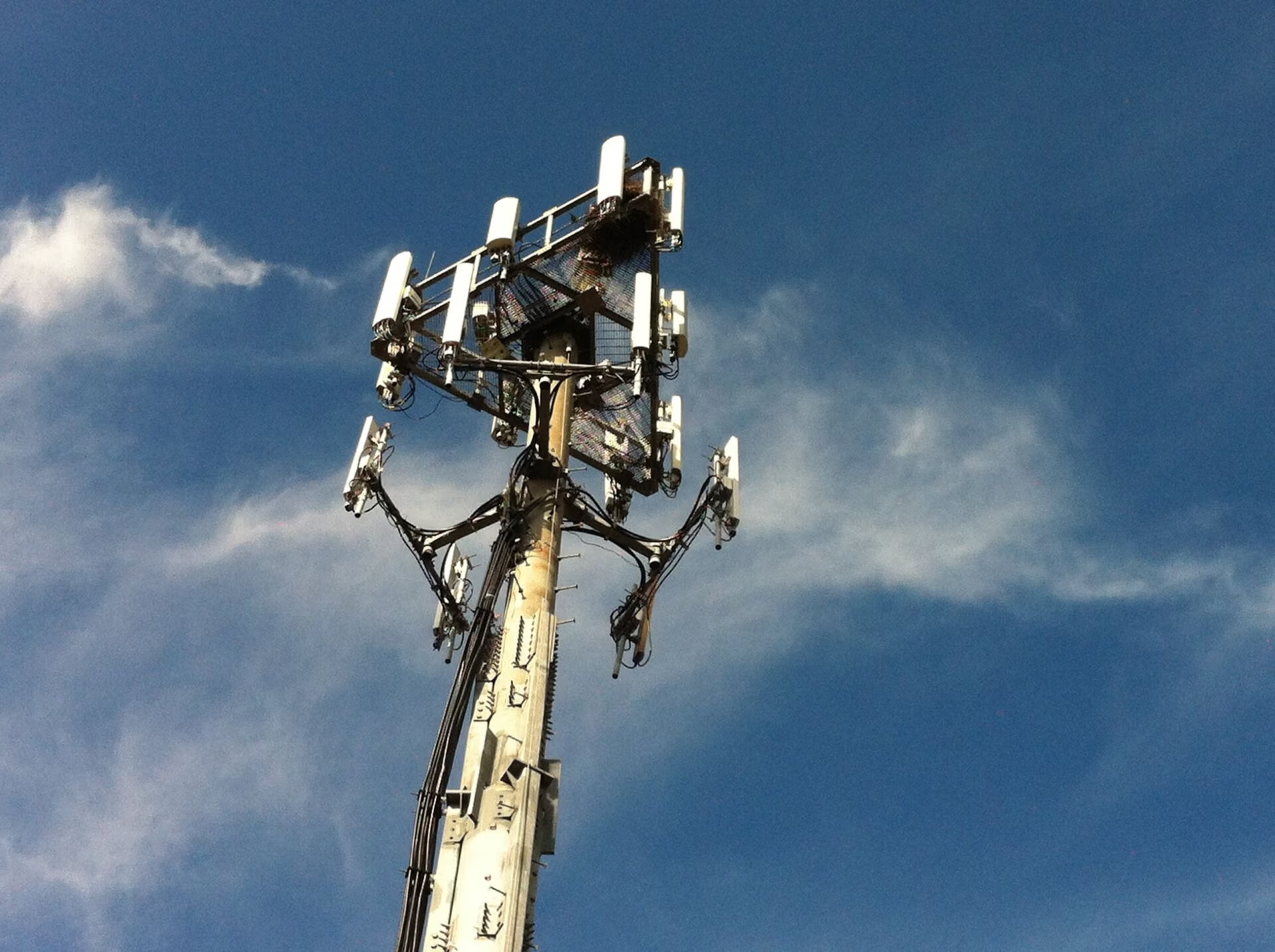
Vertical Bridge is a tower company that owns, operates, and master leases wireless infrastructure. While they are active across all of these functions, their most active area of new construction right now is build-to-suit (BTS) work — building new towers on behalf of wireless carriers, primarily Verizon. They build a few hundred new towers a year under this model.
The typical arrangement for a new Vertical Bridge BTS site works like this:
- A wireless carrier tells Vertical Bridge where it needs a new cell site (a “search ring”).
- Vertical Bridge sends out site acquisition agents to inspect the search ring and identify a suitable parcel of land that meets zoning, construction, and leasing criteria.
- Vertical Bridge negotiates a lease with the landowner.
- Vertical Bridge submits the proposed location to the carrier for approval.
- If approved, Vertical Bridge and the carrier execute a site lease agreement under their master lease.
- Vertical Bridge constructs the tower at its own cost. The ground lease with the landowner typically commences at the start of construction.
- The wireless carrier pays Vertical Bridge a monthly collocation fee to use the tower.
- Vertical Bridge may then attempt to attract additional carriers to the site.
Steel in the Air assists landowners with negotiating the initial lease with Vertical Bridge. We review the proposed site and advise on how much Vertical Bridge actually needs your specific property and whether they have realistic alternatives. We assess the value of the lease to Vertical Bridge and make recommendations on terms that can be improved.
Contact Us
What Is The Towers, LLC?
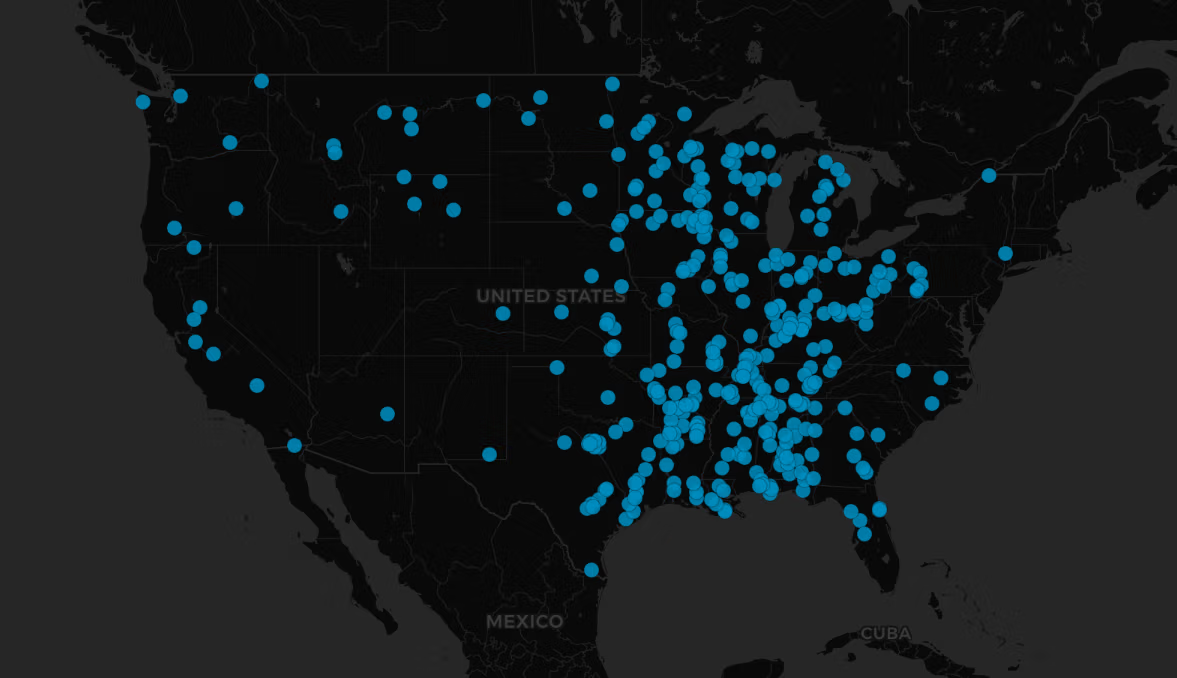
If you have been contacted by an entity called The Towers, LLC, you are not dealing with a generic tower company. The Towers, LLC is the entity created through Vertical Bridge and Verizon’s 2023 build-to-suit joint venture. Its purpose is to build new cell towers specifically to support Verizon’s network expansion.
The exact equity structure of The Towers, LLC is not publicly disclosed. We suspect that Verizon likely holds an ownership stake in the towers built through this entity and shares in any future upside from additional colocation revenue — rather than simply paying market rent as a tenant. If that is the case, it would explain why the ground lease offers associated with these sites tend to be structured the way they are (see below).
What this means practically for a landowner:
- There are different financial incentives for the lessee. The Towers, LLC is not a neutral infrastructure company shopping for the best site — it is building towers for a predetermined customer. The primary objective is satisfying Verizon’s network needs so every location must be approved by Verizon.
- The lease offer will reflect that pre-set structure. Because the VB-Verizon agreement sets the economic parameters of the deal upstream, what they can offer you as a ground tenant is constrained by that arrangement. This is not simply a negotiating tactic.
- There is still room to negotiate. Knowing the structural constraints does not mean you accept the first offer. It means you negotiate with a clear understanding of which levers actually move and which ones don’t.
What Does a Vertical Bridge or The Towers, LLC Lease Actually Pay?
There are several factors that affect what any individual lease will pay:
- How unique is the subject parcel? If Vertical Bridge can find a comparable site across the street from you, your negotiating position is weaker. If there are zoning restrictions or physical limitations that make your parcel the only viable option, you have more leverage.
- Where in the country is the parcel located? Lease rates vary substantially by geography. Markets like New York City and San Francisco sit at the high end. Rural parts of the Southeast and Midwest sit at the low end.
- Is the area rural, suburban, or urban? Generally, rates are lowest in rural areas and highest in urban areas.
- Are there zoning regulations that restrict tower placement? Restricted zoning limits VB’s alternatives and typically improves a landowner’s position. In areas with no zoning or permissive zoning, they have far more options.
- What is the probability that additional wireless carriers will collocate on the tower? If the base rent is limited by Vertical Bridge’s deal with Verizon, they are unlikely to build any tower unless they believe there is an opportunity for additional rent from collocation.
Why Published Averages Are Misleading for New Vertical Bridge Sites
You may have seen figures — including on some of our own pages — suggesting the average cell tower ground lease in the United States is approximately $1,300 per month. That figure is real, but it is a poor guide for what you should expect from a new Vertical Bridge offer, for two reasons.
First, that average includes older leases that have been escalating for 10, 20, or 30 years. A lease that started at $600 per month in 2000 with a 3% annual escalator is paying close to $1,200 today — it is counted in the average, but it tells you nothing about what a new lease in the current market pays.
Second, Vertical Bridge’s new BTS activity is heavily concentrated in rural areas where Verizon needs coverage and where land is plentiful. Rural sites command lower rents than the national average by a wide margin.
The result is that many new offers on Vertical Bridge Verizon BTS sites are coming in at $500 to $1,000 per month, with escalators of 1.5% annually. These are not outliers that can simply be countered up to $1,300 or $1,500. In many cases, they reflect the actual economics of that specific site and what the VB-Verizon structure supports. The right comparison is not the national average — it is what Vertical Bridge needs to pay to secure your specific parcel, not its next-best alternative.
What Does This Mean for Escalators — and Revenue Shares?
The 3% annual escalator, once considered an industry standard, is increasingly difficult to achieve on new VB BTS sites. If the VB-Verizon master agreement caps the annual increases Verizon pays, Vertical Bridge has a hard ceiling on what it can pass through to ground tenants. In practice that ceiling on many of these sites is effectively 1.5% to 2%.
On the question of revenue shares: some competitor pages and AI-generated content suggest asking for a revenue share as a strategy with Vertical Bridge. Vertical Bridge’s CEO has publicly stated that he dislikes revenue share arrangements. Revenue share may be appropriate where a landowner holds a genuinely unique location, but asking for it as a blanket strategy with Vertical Bridge is likely to be unproductive and will leave you staring at a tower on your neighbor’s property. Landowners are generally better served by focusing on other terms, such as restrictions on the tower footprint, limitations on subletting without consent, relocation rights, and tighter notice provisions. These protections can have real long-term value even when the headline rate and escalator are constrained.
What Does Vertical Bridge Require in Their Lease?
Vertical Bridge’s standard template lease requests the following:
- 50-year term (ten 5-year options).
- No termination rights for the landowner, but Vertical Bridge retains the right to terminate with 60 days’ notice.
- Vertical Bridge will reimburse taxes attributable to the tower and improvements.
- An exclusive right to operate communication facilities on the property.
- Vertical Bridge will remove the tower within 90 days of termination.
- Vertical Bridge may sublease the tower to other carriers at will.
- Aggressive restrictions on your ability to lease the remainder of the property to communication providers
- Vertical Bridge will maintain general liability insurance of at least $1,000,000.
- A right of first refusal (ROFR) that prevents the landowner from selling or assigning the lease without first offering it to Vertical Bridge.
While you may not have a lot of negotiating power, we help you figure out where you should and can push back.
Vertical Bridge Lease Buyouts: What You Need to Know
While Vertical Bridge manages tens of thousands of sites, we see relatively few buyout offers coming directly from them. Instead, most landowners with established Vertical Bridge leases are approached by third-party “lease aggregators.”
If you have an existing lease and are considering a buyout, keep these three factors in mind:
The Age of the Lease Matters:
Buyout offers are almost exclusively targeted at “legacy” leases—those established 10 to 20 years ago with higher rents and 3% escalators. The new BTS leases being signed today ($500–$1,000/mo) are generally not yet targets for aggressive buyout offers because the “spread” for the buyer is much thinner.
The Right of First Refusal (ROFR) Barrier:
Almost every Vertical Bridge lease contains a ROFR. If a third-party company offers you $200,000 for your lease, you are contractually obligated to offer it to Vertical Bridge at that same price first. This often chills the market; many buyout companies will lower their offer or walk away entirely because they don’t want to spend months on due diligence only for Vertical Bridge to “pre-empt” the deal at the finish line.
The “New Normal” Impact on Multiples:
Buyout companies calculate their offers based on “multiples” of your annual rent. Because the industry knows that Vertical Bridge and Verizon have structurally capped future rent growth on newer sites, the “multiple” offered for a VB lease may be lower than what you see advertised for a legacy Crown Castle or American Tower site.
While Vertical Bridge manages tens of thousands of sites, we see relatively few buyout offers coming directly from them. Instead, most landowners with established Vertical Bridge leases are approached by third-party “lease aggregators.”
If you have an existing lease and are considering a buyout, keep these three factors in mind:
How Does Steel in the Air Help?
On Vertical Bridge proposed leases, Steel in the Air provides consulting services to landowners considering a new Vertical Bridge lease or a lease with The Towers, LLC. Unlike competitors who take 20–30% of your future lease payments, we charge a flat fee—typically $3,500-$4,000. We recognize that this may seem like a significant amount when the initial offer is $500 to $1,000 per month. We don’t take on engagements unless we are confident there is meaningful room for improvement — whether in the rent, the escalator, or the non-economic terms that will matter over a 50-year lease.
On Vertical Bridge existing leases, we can advise on fair market value going forward. If your lease is approaching expiration, or if VB has approached you about extending or expanding, the tower already standing on your property substantially changes the negotiating dynamic. We can help you understand what that leverage is worth. These engagements are also flat fee, generally in the range of $4,000 to $5,000, depending on complexity and the number of carriers on the tower. For lease buyout offers on Vertical Bridge leases, we can either evaluate the offers you have received or broker the lease to secure the best terms.
Here is our commitment to you:
- The initial call is free.
- The conversation is confidential. Unlike some of our competitors, we will never sell or share your data.
- If we don’t think we can help you, or if we think it’s too early to retain us, we will tell you that directly.